


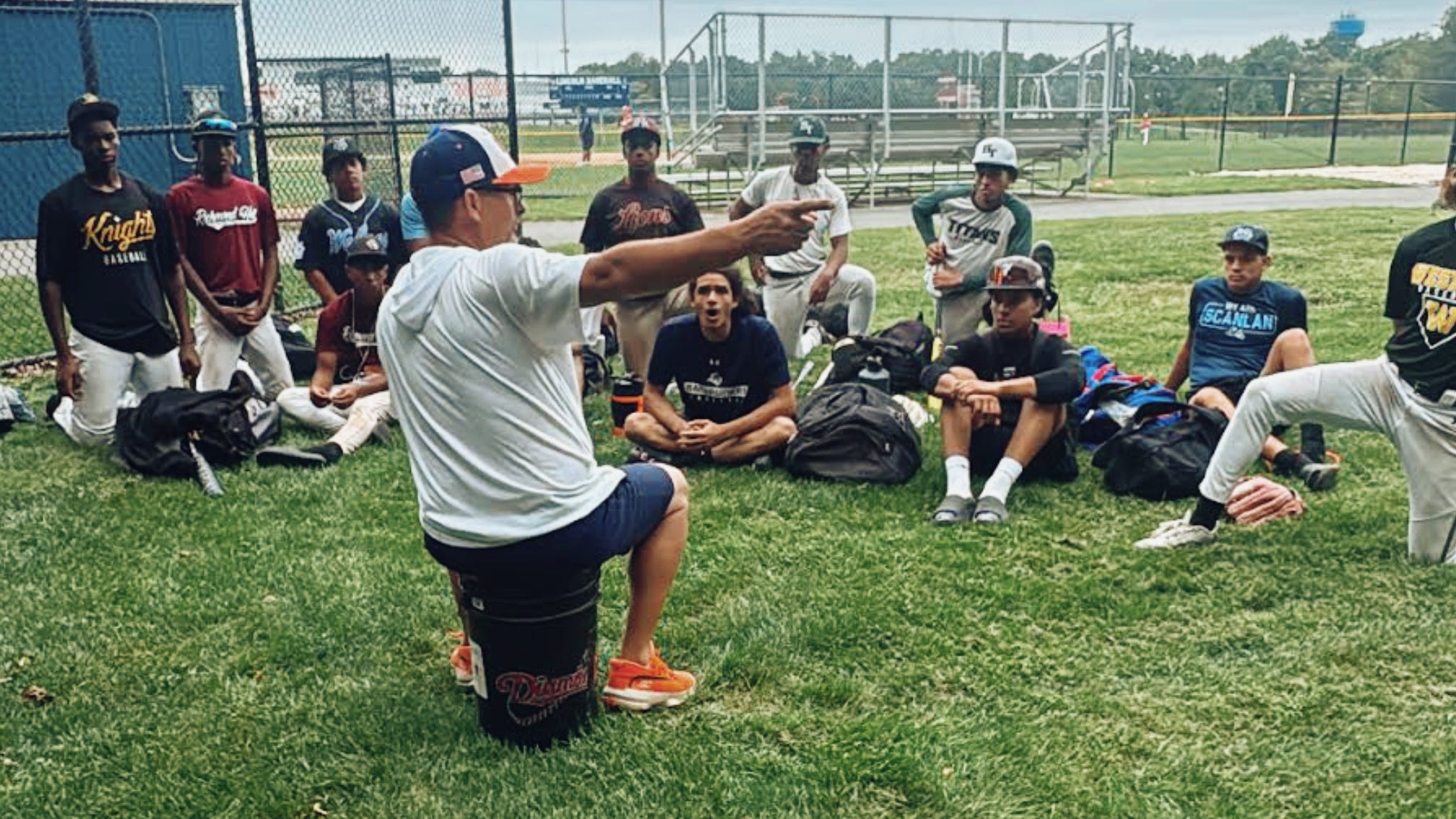
LOWER OXFORD TOWNSHIP, PA: If you believe the narrative that Black kids aren’t playing baseball anymore, you probably weren’t at Lincoln University this past weekend.
While football was dominating the September sports calendar, players from New York, New Jersey, Baltimore and Virginia made their way to Pennsylvania for Unhidden Baseball NYC’s inaugural HBCU Baseball Showcase, bringing some of the Northeast and Mid-Atlantic’s young Black and Brown baseball talent directly in front of a college coaching staff.
Powered by Lincoln University alum Max Guadalupe, Unhidden brought four programs together at the nation’s first degree-granting HBCU for something much more important than another fall baseball tournament.
This was about opportunity, exposure and showing young players that HBCU baseball is a legitimate part of their path to the next level.
Unhidden Baseball NYC was joined by North Jersey’s Willis Otanez Baseball Academy, Baltimore’s Vision Select/Charm City squad and Virginia’s Delmarva College Prospects Baseball for a full day of testing, games, campus exposure and recruiting information.
Before anybody stepped into the box, players lined up for the 60-yard dash.
It was essentially their introduction.
Speed. Athleticism. Names. Numbers.
Then it was time to play baseball.
Unhidden opened against Willis Otanez Baseball Academy, giving Lincoln University head coach Vince Connor an opportunity to evaluate players in live competition rather than the controlled environment of a traditional workout.
After their first game, the Unhidden players and their parents toured Lincoln’s campus with Lions freshman Korry Buxton. For high school players who may have never experienced an HBCU—or college life at all—the tour was another important part of the showcase.
They could see the dorms. Ask questions. Hear from somebody currently living the student-athlete experience.
That’s recruiting too.
While Unhidden toured campus, Willis Otanez returned to the field against Baltimore’s Vision Select program.
And that’s where Coach Goodwin, who heads Vision Select and also serves as the Mid-Atlantic Director for Minority Baseball Prospects, addressed a narrative Black baseball has heard for years.
“The stigma is that our kids aren’t playing baseball, but they are. You just have to know where to go to find them,” Goodwin said. “If you go down South, that’s all you see, and we are trying to get that happening here. And it’s happening...slowly but surely.”
That’s probably the biggest takeaway from the entire weekend.
The players are out here.
Maybe they aren’t always concentrated in the same places. Maybe they aren’t always playing in the tournaments receiving the most attention. And maybe every college recruiter doesn’t know where to find them.
But they’re playing.
That’s why events like this matter.
Unhidden returned for its second game against Virginia’s Delmarva College Prospects before the baseball portion of the day gave way to something every aspiring college player eventually has to confront—the reality that being able to hit, throw and run isn’t enough.
Coach Connor didn’t sugarcoat that message during the recruiting Q&A.
“I don’t care how good you can play. You won’t stay on this team if you’re f*****g off in the classroom,” Connor told the players while discussing the Lincoln baseball program’s 3.68 cumulative GPA. “I sent four guys home in the past two semesters who didn’t want to do their work in the classroom. And three of ‘em were starters.”
That’s an HBCU baseball recruiting message worth hearing.
Everybody wants to talk about velo. Exit velocity. Pop times. Sixty times. Rankings.
Connor talked about grades.
Because getting recruited isn’t the finish line. Staying eligible, earning a degree and putting yourself in position to take advantage of the opportunity matters just as much.
Sitting alongside Connor was Lincoln pitcher Solomon McKinney, who offered living proof that HBCU baseball can also provide a national platform.
The Washington, D.C. left-hander made school history this summer when he became the first Lincoln University player selected for Major League Baseball’s HBCU Swingman Classic, the showcase created by Hall of Famer Ken Griffey Jr. and presented by MLB and USA Baseball.
McKinney got the opportunity to pitch at Citizens Bank Park during MLB All-Star Week alongside some of the top HBCU baseball players in the country.
Now imagine being a high school player sitting in that room listening to somebody wearing the same Lincoln uniform explain that experience.
That’s what the pipeline looks like.
It isn’t simply about getting more Black players into Major League Baseball. Everybody wants to talk about that number when Opening Day arrives.
But you can’t start the conversation at the Major League level.
You have to talk about the 14-year-old who needs somewhere to play. The 16-year-old who needs exposure. The high school senior who hasn’t received the college interest his talent deserves. The family that doesn’t understand the recruiting process. The player who might not know anything about HBCU baseball because nobody has ever put an HBCU option in front of him.
That’s where organizations like Unhidden Baseball NYC, Vision Select, Willis Otanez Baseball Academy, Delmarva College Prospects and Minority Baseball Prospects become important.
They’re helping connect the dots.
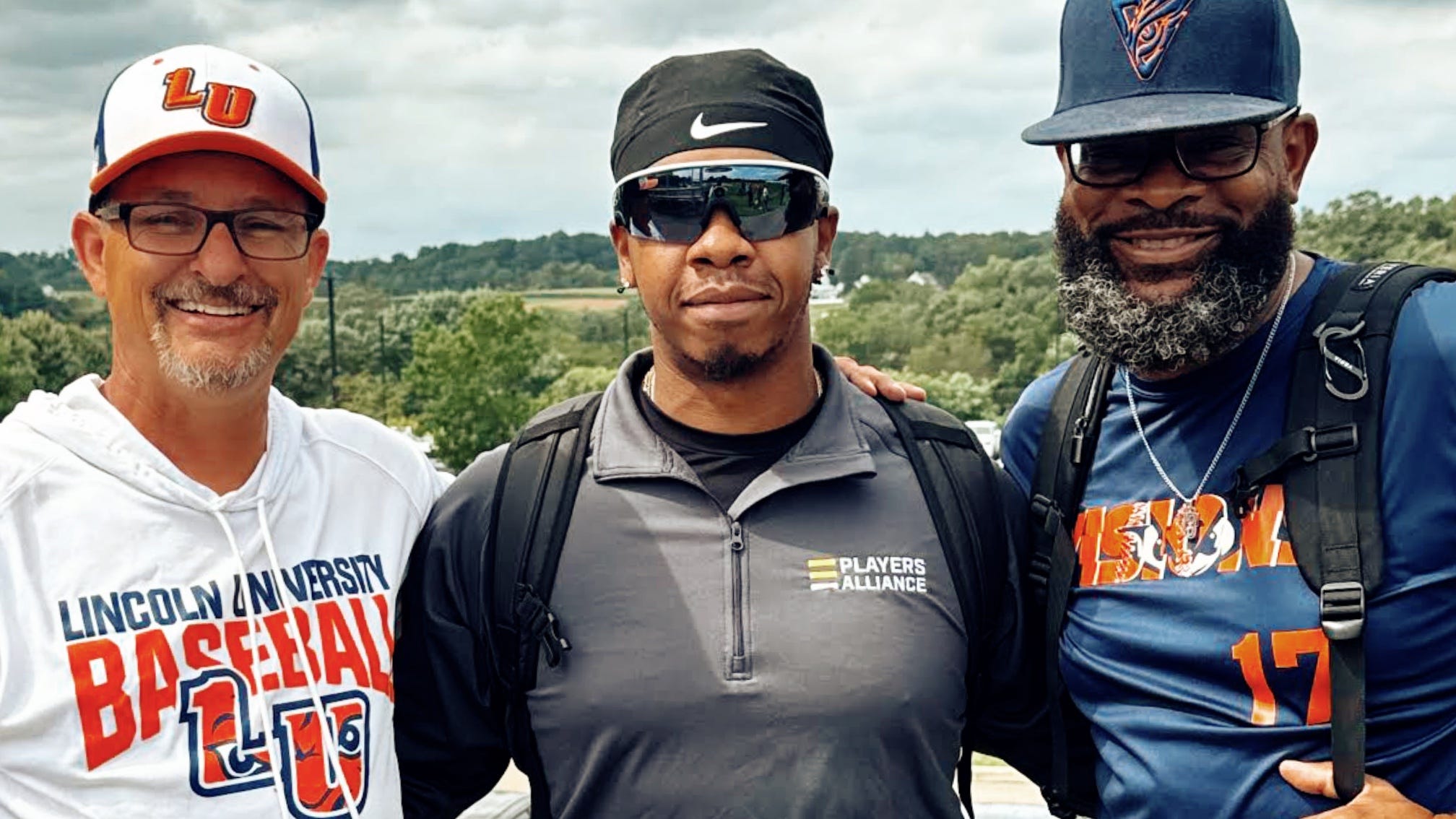
For Guadalupe, bringing Unhidden to Lincoln also made the weekend personal. He wasn’t simply taking another travel team to another college campus. As a Lincoln alum, he was bringing young players back to an institution that was part of his own journey and showing them another possible route for theirs.
And the road continues.
Unhidden Baseball NYC heads to Long Island next for the Blue Chip Northeast Elite Tournament from September 18-20, where the club will compete against another strong field with college programs expected to be watching.
Nobody earned a Major League contract at Lincoln this weekend.
That wasn’t the point.
Some young ballplayers got seen. Some parents learned more about the college process. Some players walked around an HBCU campus for the first time. A college coach got a look at talent he might not otherwise have seen.
And four baseball organizations showed up with young Black and Brown players who still love this game.
So the next time somebody tells you Black kids aren’t playing baseball anymore, tell them they’re looking in the wrong places.
We found plenty of them at Lincoln University.
Words by Sha Be Allah
For more information follow: @Unhidden.baseball.nyc