

Opinion
Marc Cheatham
When the World Champion Los Angeles Dodgers visited the White House last April, my eyes were fixated on former AL MVP, eight-time All-Star, and arguably one of the top two best American-born Black players in baseball today, Mookie Betts. Betts carried unmeasurable pressure walking into the White House that day — pressure he avoided in 2019, when he elected not to attend President Donald Trump’s White House celebration for the 2018 Red Sox.
Leading up to the Dodgers 2025 ceremonial visit, Betts publicly admitted the decision to attend was “tough,” but he wanted to be with his team. At the time, Betts told reporters, “I’m not trying to make this political by any means at all.”
While I disagreed with Betts’ decision to attend the ceremony, I offered him grace, and ultimately, a level of understanding. My concern, then as now, is that Betts was forced to make the decision alone. Before the visit, Betts told reporters, “Nobody else in this clubhouse has to go through a decision like this except me,” Betts said. “That’s what makes it tough. But it is what it is.”
Betts, 33, was the only African American player on the Dodgers roster at the time of last year’s White House visit. Unless there is an unforeseen change, he is likely to be the only African American on the Dodgers’ 2026 opening-day active roster. This puts Betts, the 2025 Roberto Clemente Award winner and a player with a well-earned reputation for community service and activism, in a marginalized position.
Unlike the NFL and the NBA, where rosters are dominated by African American players, Major League Baseball has seen a steady decline in the number of African American players since the mid ‘80s. This demographic decline left several MLB teams with two or fewer African Americans on their 40-man rosters in 2025. Betts felt isolated because he was isolated. And, in hindsight, it appears that Betts’ visit to the White House achieved his goal. The White House visit was not a distraction for the club, and the season ended with a World Series Championship, the first repeat champions in 25 years. And while I am happy for Betts, I grasp that the Dodgers are part of a larger problem.
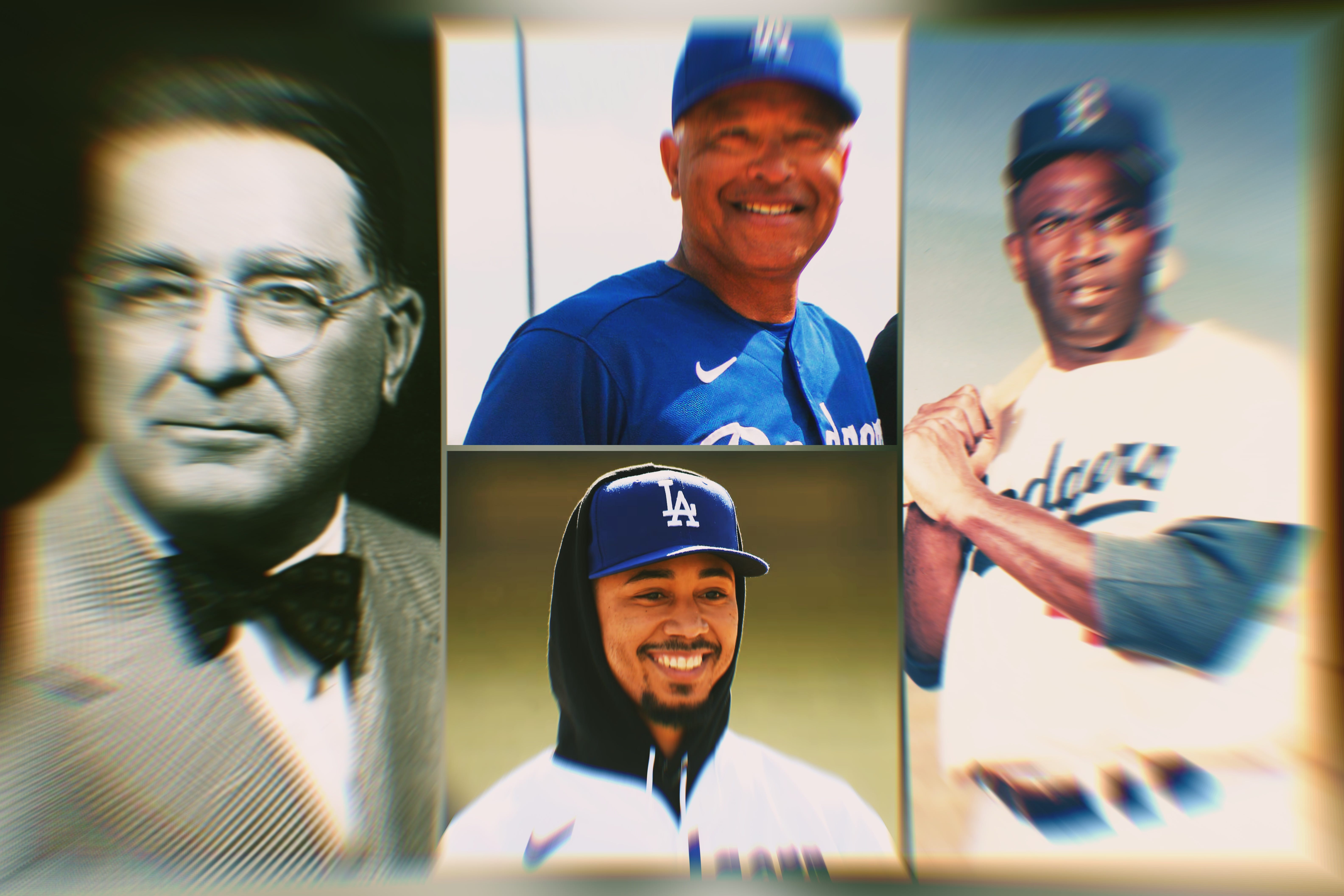
While all eyes were on Betts last year, Dodgers Skipper Dave “Doc” Roberts, whose father is African American and mother is Japanese, making him one of only two Black managers in MLB (the other being White Sox Will Venable), decided to volunteer himself as tribute in 2026. Last week at Dodgers Fanfest, Roberts, 53, when asked by about attending the 2026 White House celebration by Bill Shaikin of the Los Angeles Times, said, “For me, I stand by: I’m a baseball manager,” Roberts proclaimed. “I was raised — by a man who served our country for 30 years — to respect the highest office in our country. For me, it doesn’t matter who is in the office; I’m going to go to the White House. I’ve never tried to be political. … For me, I am going to continue to try to do what tradition says and not try to make political statements, because I am not a politician.”
I don’t have to remind anyone that the Dodgers hold a unique and historic place in American history as the club that integrated baseball after roughly 60 years of race-based segregation. They, more than any other MLB club, own the legacy of standing up for civil rights, justice, and equality. That is the Dodgers’ tradition. That alone renders Roberts’ statement ridiculous and disingenuous.
The Dodgers carry with them the legacy of Jackie Robinson, Branch Rickey, Roy Campanella, Don Newcombe, and Fernando Valenzuela. They have the biggest baseball star on the planet in Shohei Ohtani — and he’s not from the United States. In fact, Ohtani is only in the US on a P-1A visa, the same as World Series MVP Yoshinobu Yamamoto (from Japan) and Game 7 hero Miguel Rojas (from Venezuela). The Dodgers have global appeal, and their impact has the potential to be bigger than baseball — bigger than America — but they chose just the opposite. In a moment where courage is required, Doc Roberts and the Dodgers would rather shut up and dribble, so the saying goes.
I am not old enough to have personally witnessed the heights Muhammad Ali reached after defeating George Foreman in Kinshasa, Zaire, in 1974, but I understand his legacy. Ali is revered as a worldwide icon today because he didn’t squander his moment to speak out for justice, even at the cost of popularity and personal finances. The Dodgers are missing the mark, all but one.
Enrique José Hernández González Jr., better known to baseball fans as Kiké is the lone Dodger who seemed fed up with the actions of the Trump Administration. He decided to speak out against ICE raids in LA. Last June, Hernandez, 34, born in San Juan, Puerto Rico, posted the following on Instagram:
“I may not be Born & Raised, but this city adopted me as one of their own. I am saddened and infuriated by what’s happening in our country and our city. Los Angeles and Dodger fans have welcomed me, supported me, and shown me nothing but kindness and love. This is my second home. And I cannot stand to see our community being violated, profiled, abused, and ripped apart. ALL people deserve to be treated with respect, dignity, and human rights. #CityOfImmigrants
The LA Times reported that more than 40% of the Dodgers’ fan base is Latino. The Dodgers organization has said nothing about the ICE raids in LA, nothing about the Trump administration’s abuse of executive power, and even nothing in support of their own teammate’s post. Their silence sends a clear message: don’t rock the boat.
On the surface, the Dodgers’ message could be viewed as team unity — One Band, One Sound. But if you dig below the surface, it appears the only Dodgers making sacrifices are the ones who are the most isolated.
Dodgers’ relief pitcher Blake Treinen skipped the White House visit in 2021 when President Joe Biden was in office. Treinen, 37, has no problem expressing his right-wing political views on social media, and, in the case of his support for the late conservative organizer Charlie Kirk, on his team uniform. Treinen wrote Kirk’s name on his hat following Kirk’s murder. Treinen draws strength from his convictions, while Betts and Roberts, two far more essential pieces to the Dodgers’ championship puzzle, preach the message of team cohesion.
Historically, the Dodgers met the moment. Baseball integration in the ‘40s was neither easy nor popular among the game’s lords. Breaking the color barrier was difficult for Jackie Robinson and his family, Branch Rickey, and all the players who followed in the immediate aftermath. Robinson gave Rickey and the club two years before he could fight back on the field. But once Robinson started fighting back, he never stopped.
The 2026 Dodgers consist of some of the best players in the world. They have a future Hall of Fame manager in Doc Roberts. They sell the most tickets and have the most lucrative television contract. They are a global powerhouse. But when it comes to following the tradition of the Dodgers — a legacy whose very foundation is built on Robinson and Rickey and civil rights, they are silent to the point of cowardice. They are complicit, even when the ICE raids are right outside their door. And even when the targets of administration represent a larger number of loyal fans who bleed Dodger Blue.
Robinson gave Rickey two years of silence. How long will it take for this iteration of the Dodgers to pick up the mantle of those before and use their voice to advocate for a more humane, equal, and just society? Batter up.
Marc “Cheats” Cheatham is the founder of the Black Baseball Mixtape.
At some point you have to call it what it is: this isn’t about “tradition” or “team unity,” it’s about protecting the brand and the revenue stream. The Dodgers are happy to market Jackie Robinson’s legacy, global diversity, and social impact, right up until it might cost them money or access. Silence is a business decision.
Great work